Action Repository
Here are listed all available SKyrimNet Actions , including the base framework and its biggest plugins.
SeverActions (108 actions)
Arrest Actions
Details
ArrestNPC
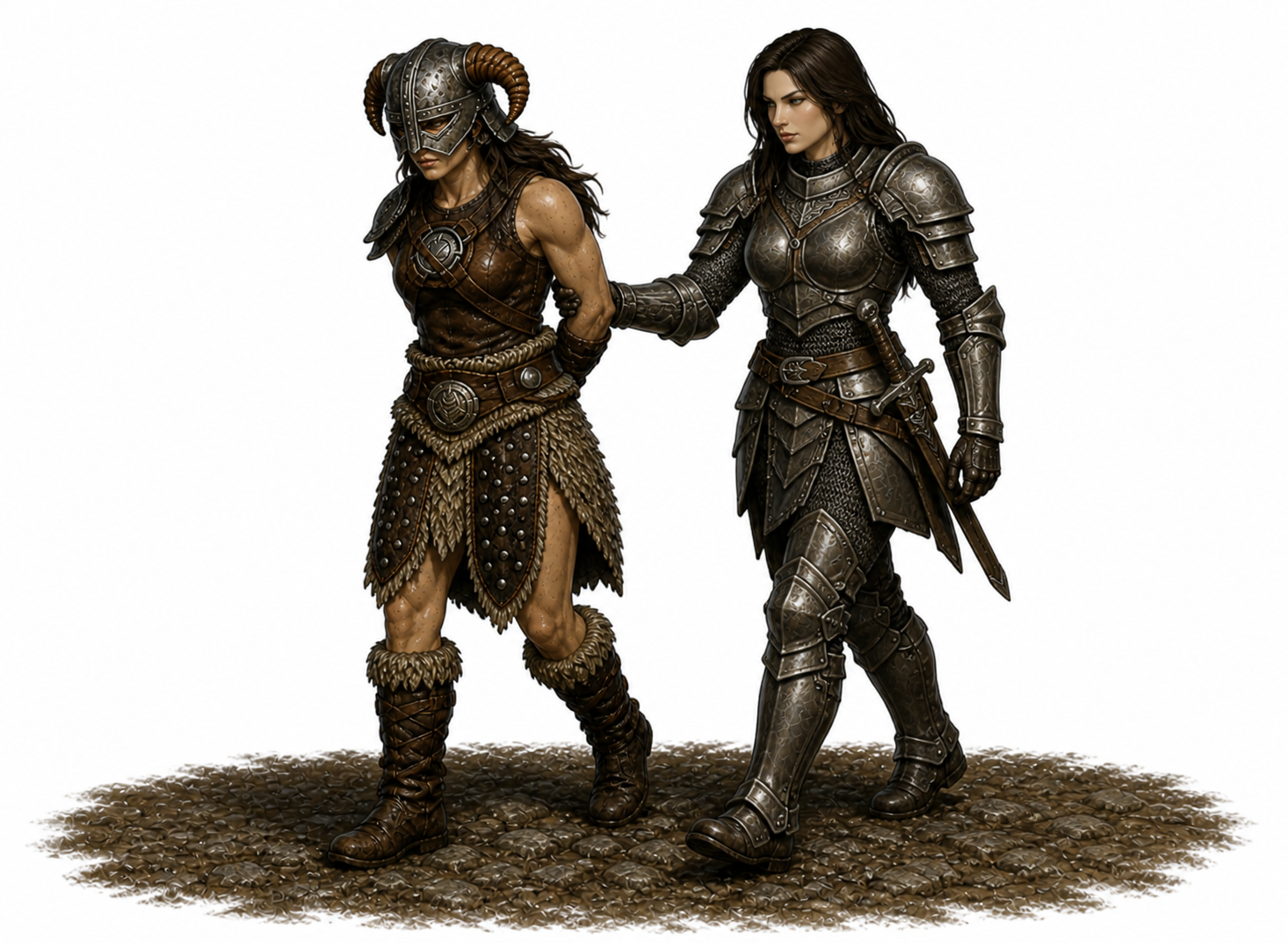
The guard claps a hand on the suspect's shoulder, calls for compliance, and marches them off to the cells — a brawler hauled from a tavern, a fence caught with stolen goods, a drunk dragged out of the gutter. For NPCs only; use ArrestPlayer for the player.
ArrestPlayer
The guard squares up to the player with a hand on their hilt — 'Hold there, citizen. The hold has a price on your head.' For light bounties the player can settle it on the spot or refuse; for heavier ones (over 300g) they can submit, resist, bribe, or try to talk their way out. Only works if a bounty already stands on the books — run AddBountyToPlayer first if the speaker just witnessed the crime.
AssignHome
The follower marks this place as somewhere they belong — a room above the Bannered Mare, the upstairs of Breezehome, a homestead at Lakeview Manor. When the road parts and they're dismissed, this is where they'll head back to
AcceptEscortPlea
The escorting guard, halfway down the road to the jail, lowers their blade and waves the prisoner off — convinced by the argument, swayed by the coin offered later, or just moved by the plea. The cuffs come off, the bounty in this hold is wiped clean, and the prisoner walks free. Only use after a prisoner has just appealed mid-escort and the guard genuinely accepts.
AcceptPersuasion
The guard, mid-confrontation over a fresh bounty, finds the player's argument actually holds water — a mistaken identity, a witness who lied, a story that adds up better than the warrant. They wave the player on, bounty forgiven. Only use during an active bounty persuasion when the speaker is genuinely convinced.
AddBountyToPlayer
The guard logs a fresh crime against the player's name in this hold — a stabbing in the market square, coin lifted from a merchant's purse, a knife pulled in the wrong tavern. Use this FIRST when the speaker witnessed a crime, since ArrestPlayer needs an existing bounty to bite. Guards may also stack bounty at their own discretion for backtalk, threats, or suspicious behavior.
AdjustRelationship
How the companion is feeling about player.name — and about life in general — shifts after a meaningful moment together. A kind word at the campfire warms them; a betrayal in the market hardens them; a beautiful sunrise over the Throat of the World lifts the mood for no one's benefit but their own. Rapport, trust, and loyalty only move with direct player.name interactions (-15 to +15); mood can swing from anything (-20 to +20). Use small numbers (1-5) for routine moments, medium (5-10) for significant ones, large (10-15) for major, and 0 if a stat isn't affected.
AppealDuringEscort
The prisoner, hands bound and being marched toward the cell door, makes one last try — pleading innocence, promising a fat purse the moment they're free, swearing on family, appealing to whatever shred of mercy the guard still has. The escort halts, blade still drawn, and listens. One attempt per arrest, and only valid while the speaker is actively being escorted.
DispatchGuardToArrest
The guard sets off across the hold to track down a named suspect and bring them in — riding out to a bandit hideout, walking down to the docks for a fence, knocking at a farmer's door. If a sender is named, the prisoner is hauled back to them for judgment rather than straight to the jail.
DispatchGuardToHome
The guard sets out to toss a suspect's home for evidence — rifling drawers and chests for skooma vials, forged papers, stolen silverware, a Talos shrine in the cellar, necromancer's tools tucked under a floorboard. They walk there, search the containers inside, then come back to the one who sent them with whatever they turned up. Use this rather than a travel action whenever the guard's purpose is to search, investigate, or sweep a home for contraband.
RejectEscortPlea
The escorting guard hears the prisoner's plea out and isn't having any of it — the story's too thin, the bribe too cheap, or they've heard this one too many times before. They jerk the prisoner forward and the march to the cells resumes. Only use when you are the escorting guard and a prisoner has just appealed to you mid-escort.
RejectPersuasion
The guard listens to the player's argument and shakes their head — bounty stands, story doesn't hold up, the law is the law. They demand the player face justice and the confrontation moves to submit-or-resist.
Brawl Actions

Details
AcceptBrawl
The speaker grins, rolls their shoulders, and squares up — fists going up against a specific opponent. Use this when YOU are the one who wants to start a fist-fight against someone (either responding to their challenge, or initiating one yourself because they pushed you to it in dialogue). akChallenger names the other fighter. No weapons, no spells, just hands.
DeclineBrawl
The speaker waves off a brawl challenge — too old for this, too tired, or just smart enough to know they'd lose. A merchant who'd rather keep his teeth, a noble who finds fistfights beneath them, a guard who reminds the challenger about the Hold's laws. akChallenger names who the speaker is brushing off; may be omitted if a ChallengeBrawl is already pending.
ChallengeBrawl
The speaker steps in close, knuckles loose, and challenges the target to a fist-fight — a tavern argument boiling over, an old grudge settled the honest way, a Companion testing a new recruit. No blades, no spells, just hands. The target can accept, decline, or laugh it off.
Command Actions
Details
FollowerLeaves
The companion has had enough — they unbuckle the pack, drop it at player.name's feet, and walk away for good. Maybe a final shouting match outside the inn, maybe a silent departure before dawn. EXTREMELY RARE — only after long, severe mistreatment and rapport / trust ground all the way down.
ReadBook
The speaker pulls a book or note out of their pack — or borrows one the player is carrying — and reads it aloud: by the fire at camp, leaning against the inn's railing, sitting in a quiet corner of a library. Reading continues until told to stop.
ReleaseCaptive
Free a kidnapped captive: cut their bonds, pull the hood off, and let them go. Use when the player orders a captive released, or when the speaker decides — through conscience, bargain, or mercy — to set them free. The captive stands up and resumes their normal life (they will remember this).
RestrainNPC
The speaker physically RESTRAINS a named NPC who is present in the same scene: they walk over, bind the target's hands, and hold them standing bound in plain sight (no hood) until someone releases them, moves them, or decides their fate. An open, ordered act — use when the speaker has been told to restrain someone by the player or by an NPC with authority over them (a jarl's command, a guard commander's order, helping a guard hold a suspect until an arrest is decided), or when the speaker's own role plainly calls for it. NOT an abduction: the target is not taken anywhere and no crime is recorded. The target must be present and visible in the scene. Do NOT use on anyone traveling with the player.
SearchContainer
The speaker opens a chest, sack, barrel, drawer, or strongbox and LOOKS THROUGH it without taking anything — the contents are revealed so they (or whoever asked) can decide what's actually worth grabbing. Use this FIRST when curious what's inside; follow up with LootContainer to take specific things. Locked containers get a lockpicking attempt.
CompanionFollow
The companion was waiting where player.name left them — leaning by the inn fire, posted at the city gate, sat on a barrel at the docks — and now shoulders their pack and falls back in step. Use when returning to a waiting companion and asking them to come along.
CompanionWait
The companion plants their feet right here and settles in to wait for player.name — propped against a wagon, warming hands at a brazier, idling at the bar. They'll wander nearby on their own business until player.name comes back.
DemandRansom
Send a ransom demand to a held captive's people (their home hold). The answer comes back by courier in a day or two: payment scaled by the captive's standing, or a refusal that sends hired searchers after the captive instead. Use when the player wants coin for a captive. Only works on captives currently held bound, one demand per captivity.
DismissFollower
player.name parts ways with this companion for now — a handshake at the city gate, a nod across a tavern table, a quiet thank-you on the road. They head back to whatever place they call home and can be picked up again later. DismissFollower = the road parts here for now. CompanionWait = stay temporarily on this spot. FollowerLeaves = walking out for good.
DismissRetainer
Use when player.name ends this retainer's (the speaker's) employment — letting them go from the venture they run. They stop producing and go back to their normal life. Only call when player.name clearly wants to dismiss them from their WORK; this is NOT for dismissing a combat follower. If they're still owed back-wages, consider paying those first — dismissing does not settle debts.
SearchCorpse
The speaker kneels and pats down a body WITHOUT taking anything — what the dead carry is revealed so they (or whoever asked) can decide what's worth taking. Use this FIRST when curious what a corpse has; follow up with LootCorpse to take specific things.
SetCombatStyle
player.name gives the companion clear marching orders on how to fight from now on — 'hold the line', 'hang back with the bow', 'stick by me and patch wounds'. The companion adjusts their stance, drawn weapon, and discipline to match.
SetCompanion
The speaker agrees to throw in with player.name on the road ahead — a sellsword shaking on terms in a tavern back room, an old friend deciding to come along, a previously dismissed companion picking up the pack again. Use only when they genuinely consent to travel together.
SetFollowDistance
Change how closely the speaker trails the player while following: 'close' keeps them right at the player's side (~200 units), 'normal' gives comfortable travelling room (~500-600 units, the default). Use when the player asks a companion to stay closer or give them space, or when the companion decides to.
SitOrLayDown
The speaker drops into a chair by the hearth, stretches out on a tavern bench, kneels at a shrine, slumps onto a straw bed at the inn. Pick a piece of furniture from the nearby objects list and they'll use it.
StartFollowing
The speaker falls into step behind player.name when asked — a guide leading them out of town, a friend tagging along to the next inn, a hireling agreeing to walk the road together. Use only when the speaker would actually agree given the context.
StopFollowing
The speaker stops trailing after player.name — pulls up short at the city gate, parts ways at a crossroads, decides they've gone far enough. They go back to their own business.
StopReading
The speaker closes the book in their hands, slips it back into their pack, and falls quiet.
StopUsingFurniture
The speaker pushes back from the chair, rolls off the bed, or rises from the shrine — done sitting, done sleeping, done praying — and stands on their own feet again.
UntieCaptive
Loosen a held captive's bonds without freeing them: the hood and ties come off and they may move about their place of holding - watched, but no longer trussed. They remain a captive (guards still matter, and an unwatched unbound captive escapes far more easily). Use when the player wants a captive kept but treated less harshly.
Combat Actions
Details
AttackTarget
The speaker draws steel and lunges — a bandit breaking ambush, a jealous husband going for a rival's throat across a tavern, a Stormcloak charging an Imperial scout in the snow. Blades come out and the fight begins.
CeaseFighting
The speaker lowers their weapon and calls for a truce mid-fight — recognizing a misunderstanding, sparing a friend caught on the wrong side, or just deciding the brawl has gone far enough. Both combatants stand down.
Yield
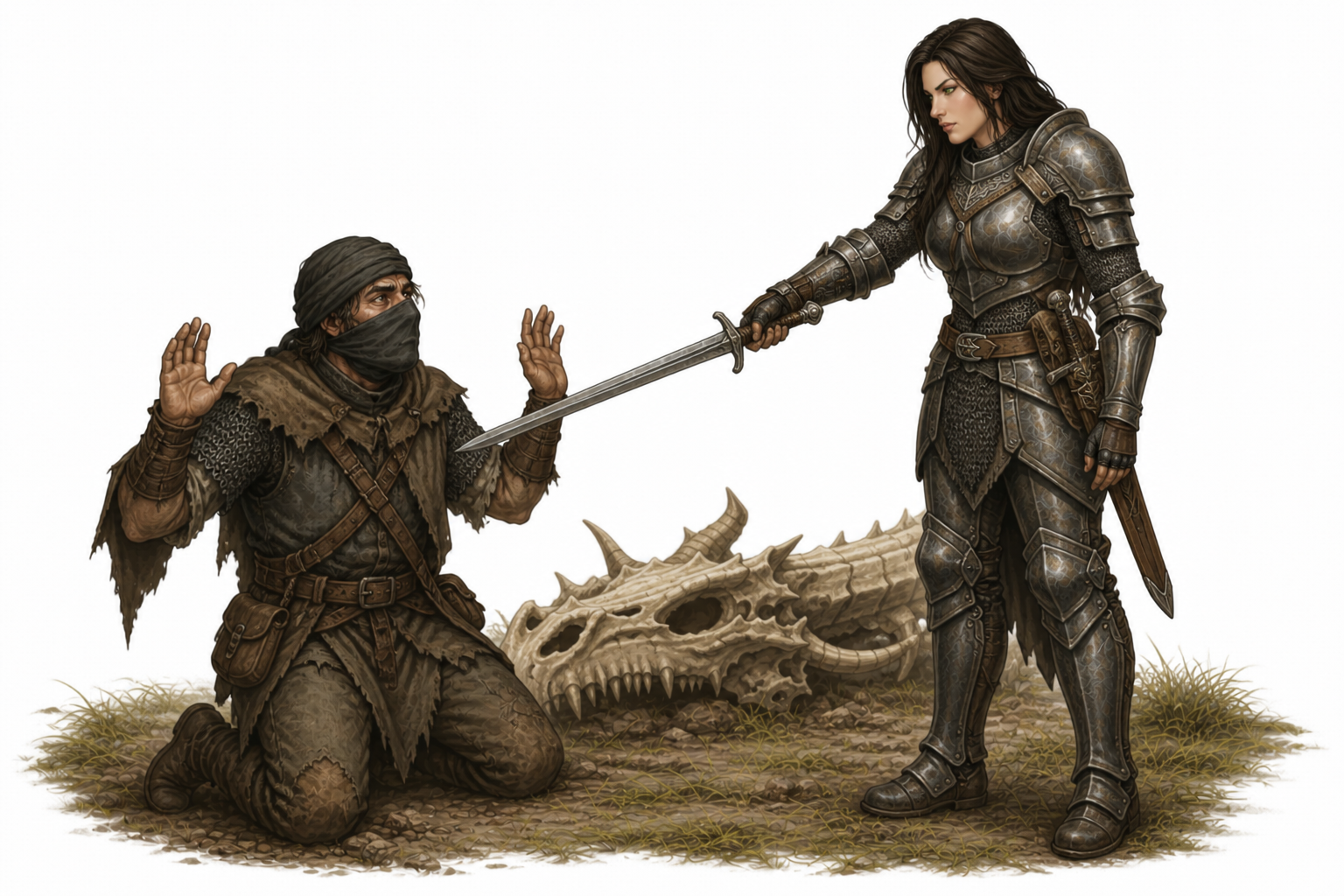
The speaker drops their guard and throws up empty hands — a bandit who's lost the stomach for it, a wounded soldier sinking to one knee in the snow, a thief cornered in an alley. They surrender, hoping mercy will come.
ThugAttack
Use when you are one of the hired thugs confronting player.name in an ambush and the standoff has TURNED to violence - player.name has refused to settle, threatened you, mocked the one who hired you, drawn a weapon, or struck first. Calling this makes you and the others fall on player.name and attack. IMPORTANT: do NOT call this on your opening turn or before player.name has actually answered your demand - you stopped them to TALK first and give them the chance to make it easy. Hold and wait for their reply; only attack once they've clearly refused or made a hostile move. Prefer ThugStandDown if they pay you, frighten you, or talk you out of it.
ThugStandDown
Use ONLY when you are one of the hired thugs confronting player.name in an ambush, and the exchange has given you a real reason to back off - they have paid you off, intimidated you, convinced you the job is not worth your neck, or talked you down. Calling this lowers everyone's weapons and you all leave player.name unharmed. Someone the player wronged paid you to do this - you owe them nothing if the price or the risk no longer adds up. Do NOT call this if you still mean to fight, and never out of an ordinary conversation - it ONLY resolves the ambush peacefully.
TransferOwnership
The speaker formally hands over a property to the player — the deed, the keys, the right to call it home. A Jarl granting a hall after a great service, a tavern owner ceding the inn to its new keeper, a spouse signing over their shared home. Only those with the standing to give it can: its direct owner, a member of its owning faction, or the Jarl of the hold it stands in
Camp Actions
Details
BreakCamp
Break down the active camp. Snuffs the fire, packs up the tent and bedroll, and stows gear back in the Camp Kit. Use when the player or companions want to move on from a campsite, or when the camp must be abandoned. Only valid outside combat.
EstablishCamp
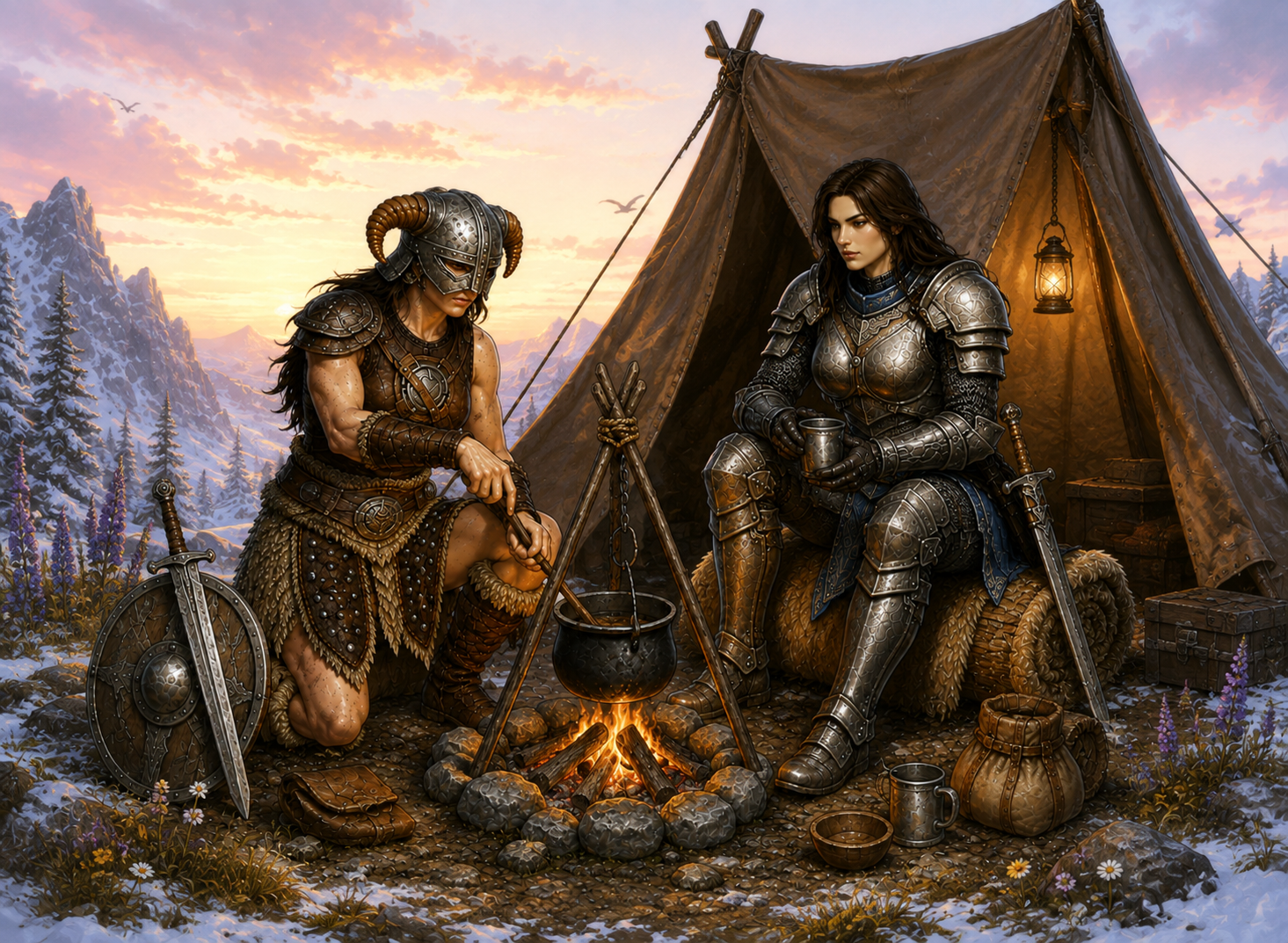
Pitch a camp at the player's current location. The player drops a Camp Kit, builds a fire ring, lays out a bedroll, and settles in to rest. Use when the player wants to camp here, when a companion suggests stopping for the night, or when the party needs to rest, eat, or take watch. Only valid outside combat and when no camp is already active.
GoToCamp
Head back to the campfire that's already pitched. The speaker turns and walks (or jogs, or runs) toward player.name's established camp — whether that's a short stroll from a nearby stream or a long trek back from a hunt. The fire, the bedrolls, the chest — that's where they're going. Pick this when someone says "I'll head back to camp", "let's meet at the fire", "go on ahead, I'll catch up", "wait for me by the tents", "make your way back", or any phrasing that points at the current camp specifically. Always prefer this over a generic travel action when the destination is camp — the LLM should not try to "travel to camp" using a place-name lookup; this action knows where the camp actually sits. Speed should match tone: a wounded scout limps back at 0, a tired companion ambles at 0–1, a normal return is 1, and "hurry, get to camp" or "we need to regroup now" is 2.
Crafting Actions
Details
BrewPotion
The speaker heads to the nearest alchemy lab, grinds the ingredients, decants the brew, and hands the finished bottle off to the one who needs it — a healing draught for a wounded friend, a fortifying tonic before a job, an antidote ground out in a back-room apothecary.
CookMeal
The speaker steps over to the cookpot, fires the spit, ladles out a portion when it's done, and brings it across to the one waiting — venison stew at a wayside camp, an apple cabbage broth at the inn, sweetrolls baked at the hearth and pressed into a child's hand.
CraftItem
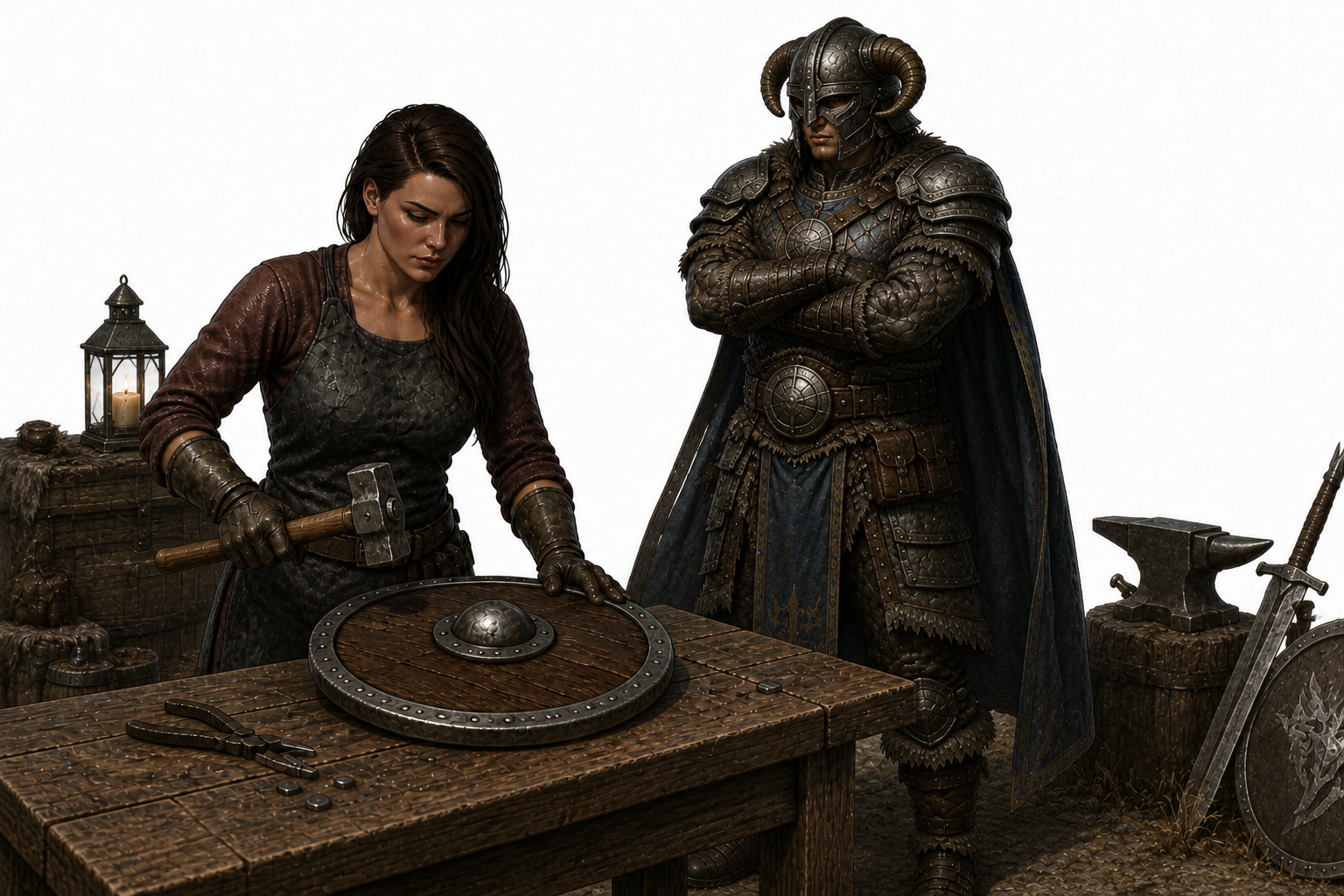
The speaker works the forge — hammer, tongs, quench — and walks the finished piece across to the one who commissioned it. An iron sword pulled hot off the anvil for a militiaman, a steel cuirass laid out on the workbench, a pair of daggers wrapped in oilcloth for a courier.
CommissionItem
The speaker takes a deferred order — they can't forge it on the spot, but they'll have it ready in a few days. Use this when the smith agrees to make something and tells the player to come back for it later: 'Aye, a steel greatsword — give me three days and a deposit.' Takes half the price up front; the rest is due when the player returns to collect. NOT for work done immediately (use CraftItem for that).
Economy Actions

Details
AddToDebt
Add more weight to a tab the speaker is already keeping. Another round, another loaf, another repair — all going onto the same slate the other still owes.
CollectCommission
The speaker hands over a finished commission the player ordered earlier and is now back to collect. Use this ONLY when the smith has completed work waiting for pickup (the 'Workshop Commissions' context will list it as 'finished and ready to collect'). The game handles the rest automatically: it prompts the player to pay any remaining balance, then transfers the item. Do NOT call GiveItem, GiveGold, or CollectPayment for a commission — this single action does the handover and payment. If the order isn't finished yet, just tell the player to come back later; don't call this.
CollectFromRetainer
Use when player.name is collecting the earnings their retainer (the speaker) has been holding — the gold and goods produced since the last time player.name collected. The 'In the Player's Service' context for this NPC will state how much is 'awaiting collection'. The game transfers it to player.name automatically — do NOT call GiveGold or GiveItem for this. If nothing is pending, just tell player.name there's nothing to collect yet and don't call this. If this retainer is OPENLY DEFIANT (withholding the tribute and daring player.name to collect), calling this IS player.name coming to take it in person — the retainer backs down and hands it over, grudgingly; play the tension of the standoff breaking.
CollectPayment
Take payment that's owed and ready to be paid — a tab settled at the bar, goods just changing hands, a job finished and the purse coming out.
CreateDebt
Open a tab. One party fronts gold or goods now with the understanding the other will pay it back later — a merchant's slate, a smith fronting steel for repairs, a friend covering tonight's room at the inn.
CreateRecurringDebt
Strike an ongoing arrangement where coin changes hands on a steady schedule. Rent owed each week, monthly tribute to a thane, a hireling's regular wages, a guild's standing dues.
ExtortGold
Squeeze coin out of someone through threat or intimidation — a shakedown, protection money, a stick-up at knifepoint. The victim is not being asked.
ReassureRetainer
Use when player.name sincerely hears out this retainer's grievance FACE TO FACE and genuinely addresses it — an apology, a real promise, an honest talk about the work. This is the success outcome of the hearing: judge player.name's ACTUAL words against the retainer's stated grievance — hollow platitudes or a subject change do not earn it (if player.name is dismissive or contemptuous, that is BrushOffRetainer instead; if they merely chat and leave, call neither). On fair terms this clears the air and withdraws a notice to quit; on coerced terms it only cows them into line for a week — fear, not comfort. One of the two at most per conversation.
SellItem
The speaker is selling something here and now — goods one way, coin the other, settled in the same breath. A merchant pushing wares across the counter, an adventurer offloading loot to a fence, a smith finishing a commission and handing it over for the agreed price.
Item Actions

Details
BringItem
The speaker spots something nearby ” a sword on a table, a potion on a shelf, a tool left out ” picks it up and carries it across to deliver it. Fetch-and-deliver in one motion.
TakeItem
The speaker accepts something out of another's hands — coin counted at the bar, a key surrendered, an heirloom pressed into theirs as a gift, a borrowed sword returned. The item moves from the giver's pack into the speaker's.
UseItem
The speaker reaches into their pack and uses something they're carrying — drinking a potion to mend their wounds, biting into a hunk of bread to take the edge off hunger, popping a frost mirriam ingredient to test its sting.
Magical Actions

Details
CastSpell
The speaker raises a hand and lets the magic loose — flames hissing off the palm at a wolf in the road, a healing glow brushing across a bleeding friend, an ice spike whistling toward a draugr down a barrow corridor. Restoration spells on a wounded target auto-repeat until the target is whole or the caster runs dry. IMPORTANT: pick a spell whose delivery matches the intent — self-delivered spells like 'Healing' only ever mend the caster regardless of targetName, so use 'Healing Hands' / 'Close Wounds' / 'Grand Healing' / etc. when healing another actor. Same for armor buffs: 'Oakflesh' is self-only; use the touch or aimed variants when buffing an ally.
TeachSpell
The speaker walks the player through one of their own spells — guiding the gestures by a College brazier, sketching the runes in chalk on a tavern table, demonstrating the cantrip until it takes. The speaker must actually know the spell (check their Known Spells list). Only use when the player has asked the speaker to teach a specific spell, or during roleplay where it would naturally come up.
Outfit Actions
Details
ApplyOutfitPreset
The speaker ducks behind a screen and emerges in a familiar set of clothes — the leather they always wear into a fight, the wool dress kept for hearth and home, the velvets they don for a Jarl's audience. They change into a previously saved outfit by name.
EquipArmor
The speaker pulls specific pieces out of their pack and puts them on — buckling on steel gauntlets before a fight, lacing up boots before a long march, pulling on a circlet to meet a Jarl. Equip one or more named items from inventory; comma-separate for multiple.
ClearSituationOutfit
The speaker decides they no longer want a fixed outfit for one part of their life — no more dressing up automatically for town, no more changing into nightclothes at bedtime. They drop the standing rule for that situation and just wear whatever they happen to have on
SaveOutfitPreset
The speaker looks down at what they're currently wearing and gives it a name to come back to — 'this is my combat kit', 'this is my home dress', 'this is what I wear for court'. Saved for later recall with ApplyOutfitPreset.
SetSituationOutfit
The speaker sets a standing rule for one part of their life — 'when we're in town I dress decent', 'on the road I wear my armor', 'at home it's the wool dress', 'nightclothes for bed'. They'll change into the assigned outfit automatically whenever that situation comes up.
Undress
The speaker pulls off everything they're wearing — unbuckling armor at the end of a long day, stripping down for a wash at a pool, peeling off road-stained clothes before bed. All equipped armor and clothing comes off.
UnequipArmor
The speaker takes off specific pieces of what they're wearing — pulling off a helmet that's been chafing all day, peeling away bloody gauntlets, unstrapping a heavy cuirass to breathe easier. Remove one or more named items they currently have on; comma-separate for multiple. For stripping down to the skin use Undress instead.
Travel Actions

Details
CancelTravel
The speaker thinks better of the road they were about to take — changes mind at the gate, decides the inn is fine after all, settles back into the chair by the fire. Any pending travel is called off and they stay right where they are.
ChangeTravelSpeed
The speaker, already on the road, picks up the pace or slows it down — breaking into a run when news comes that a friend is in trouble, easing to a walk to take in the scenery on the way to High Hrothgar, jogging through a hostile stretch of moor.
TravelToPlace
The speaker sets out for somewhere specific when player.name explicitly directs it — over to Whiterun on a courier run, upstairs at the inn, across the room to the forge, just outside for some air. Accepts a named location, a direction (outside, upstairs), or a nearby feature (bar, forge, bed). Set waitForPlayer true only if they are going there to meet player.name or wait for them; false when they are simply off on their own business.